Most people notice porch posts for the way they look: the material, the profile, the finish. But before any of that matters, a post has to do its job: carry the weight of the roof or overhang above and transfer that load safely down to the foundation.
What determines whether a post is up to task? A combination of material, dimensions, installation method and the specific demands of the structure it supports. These variables don’t just affect how long a post last, but also how the entire front of the house performs under real conditions, from heavy snow to decades of seasonal movement.
Knowing how load-bearing posts actually work, what drives their capacity and how materials compare makes that decision a lot more straightforward, whether you’re planning a new build or replacing aging columns.
What Makes a Porch Post Load-Bearing?
A porch post is considered load-bearing when it actively supports weight from above and transfers that load down to the ground or foundation. This typically includes the weight of the porch roof, any attached framing and additional loads such as snow, wind or even upper-level structures in some designs.
Unlike a purely decorative column, a load-bearing post is part of the structural system, positioned beneath beams or headers and sized to handle compressive forces without bending, shifting or failing over time.
Here’s the distinction: If removing a post would compromise the stability of the porch or roof, it’s load-bearing.
Factors That Determine Porch Post Load Capacity
Several variables influence how much weight a porch post can safely carry. These factors must be evaluated together rather than in isolation, as each one contributes to the overall performance of the system.
Post Material and Construction
Not all post materials perform the same way under load. Strength, durability and resistance to weather and moisture vary significantly, and those differences matter when the post is holding up a roof.
Wood remains a popular choice due to its natural strength and workability. Species such as cedar and treated lumber provide solid support while also resisting decay when properly maintained.
However, engineered wood products, such as laminated or glued components, can deliver even greater consistency and strength by minimizing natural defects found in solid wood. PVC and composite wraps are primarily aesthetic choices. Most need a structural core (wood or steel) to carry any real load, since the outer material alone isn’t up to the job.
Post Dimensions and Height
Post size directly affects load capacity. A larger cross-section handles compressive forces better, which matters most when the structure above is heavy or the post span is long.
Height is equally important. Taller posts are more prone to instability, especially if slender. As height increases, the risk of lateral movement or bending also rises, potentially reducing the effective load capacity.
This relationship between height and thickness is critical. A post that performs well at one height may not be suitable at another without adjustments to its dimensions or additional reinforcement.
Roof and Structural Load
The amount of weight a porch post must support depends on the structure above it. A simple porch roof with lightweight materials places less demand on posts than a heavier system with tiles, multiple layers or extended spans.
Environmental loads also play a large role. Snow accumulation, wind pressure and even seismic activity can increase the forces acting on the posts. These factors must be accounted for when determining the appropriate size and type of post.
Load calculations follow building codes and engineering standards that account for both dead loads (the permanent weight of the structure) and live loads like snow, wind and foot traffic. The goal isn’t to meet the minimum. It’s to build in enough capacity that unexpected stress isn’t a problem.

Solid vs. Built-Up. vs Glulam Porch Posts
Not all porch posts are constructed the same way. The internal structure of a post can significantly affect its strength, stability and long-term performance.
Structural Strength Differences
Solid posts are made from a single piece of lumber. While they can be strong, their performance depends heavily on the quality of the wood. Natural imperfections such as knots or grain inconsistencies can reduce their strength.
Built-up posts are created by fastening multiple pieces of lumber together. This method can increase strength by distributing loads across several components, but it relies on proper assembly. If not constructed correctly, built-up posts may not perform as intended.
Glulam posts, or glued laminated timber, are engineered by bonding layers of wood under controlled conditions. This process results in a highly consistent and strong product that often exceeds the performance of both solid and built-up options. Because defects are minimized and grain patterns are optimized, glulam posts can handle higher loads with greater reliability.
Stability and Warping Resistance
One of the challenges with solid wood posts is their tendency to warp, twist or crack over time due to moisture. These movements can affect both the structural performance and the appearance of the porch.
Built-up posts can reduce some of this movement, but they’re still subject to the behavior of natural wood.
Glulam posts offer a clear advantage in this area. Their layered construction improves dimensional stability, making them less prone to warping or twisting.
Common Post Sizes and Applications
Porch posts come in a range of standard sizes, each suited to different structural needs.
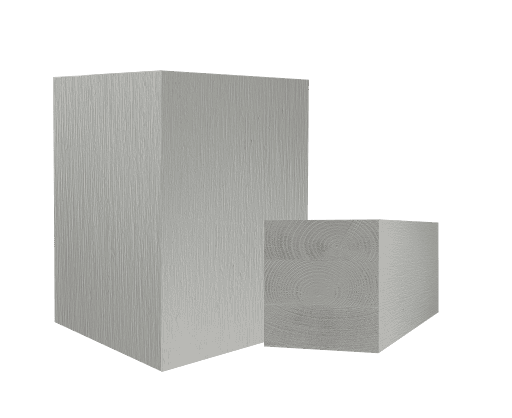
A 4×4 post is typically used for lighter loads or shorter spans. It may be sufficient for small porches or decorative elements, but is usually not ideal for supporting heavier roofs or extended structures.
The 6×6 post is one of the most widely used options for load-bearing porch posts. It provides a strong balance between structural capacity and visual proportion, making it suitable for many residential applications.
For larger porches or structures with significant loads, 8×8 posts offer increased strength and stability, reducing the risk of buckling and providing a more substantial appearance for heavier architectural designs.
Selecting the right size depends on the specific load requirements, spacing between posts and overall design of the structure. It’s always better to choose a post that exceeds minimum requirements rather than one that operates at its limit.
Design Considerations for Porch Columns
Beyond structural needs, porch posts also play an important role in the overall design and visual appeal of a home.
Proportion is one of the most important considerations. Posts should be sized to complement the scale of the porch and the house as a whole. Undersized posts can look out of place, while oversized posts can feel bulky.
Spacing is also important. Wider spacing can create a more open look but may require larger or stronger posts to handle the increased load. Closer spacing can reduce the load on each post but may change the visual rhythm of the porch.
Proper anchoring at both the top and bottom of the post ensures that loads are transferred effectively and that the structure remains stable under lateral forces such as wind. Metal brackets, base plates and secure fasteners all contribute to a reliable installation.
Finally, long-term durability should always be front and center. Exposure to moisture, temperature changes and UV radiation can affect materials over time. Choosing high-quality, properly treated or engineered posts helps maintain both structural integrity and appearance for years to come.
Building Strong, Reliable Porch Structures
A porch is only as good as what holds it up. Load-bearing posts carry roof loads, resist lateral forces and anchor the whole structure to the ground below. When sized, selected and installed correctly, they can do that job for decades without issue.
Undersized or poorly chosen posts don’t announce themselves until there’s a problem. Belco Forest Products supplies the structural lumber and engineered wood products contractors trust for load-bearing work. Talk to the team and get the spec right from the start.